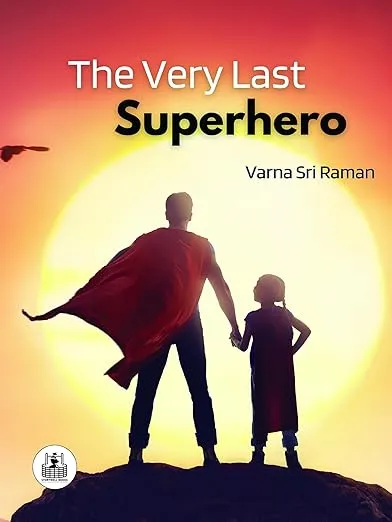
EVERY EMPIRE THAT FORGETS ITS OWN DATA WILL BE REMEMBERED BY ITS WRECKAGE.
Resistance slogan, spray-painted near Okhla, 2061
When Heroes Fell
The world once believed in heroes.
They soared across our skies for two glorious decades in plasma suits and gravity-defying capes. They diverted cyclones with quantum manipulators, erected shimmering micro-climate shields around choking cities, and evacuated thousands from rising floodwaters. Their faces beamed from billboards and holographic displays, promising salvation through extraordinary abilities and unwavering courage.
India embraced them wholeheartedly: the Delhi Climate Brigade, with its shining headquarters in the heart of the capital; the legendary Captain Indra, whose weather-control technologies saved countless lives during the Great Storms of 2055; and the Quantum Corps, masters of particle manipulation who could purify water with a touch and cleanse the air with a gesture. They were gods among us, and we worshipped them with childlike faith.
Schoolchildren collected their holograms and played trade cards, while government ministers competed for photo opportunities beside them. Even the scientific community – usually so sceptical – saw the embodiment of technological optimism in these superhumans, the perfect union of human ingenuity and moral purpose.
No one asked the difficult questions. No one looked too closely at the corporate logos discreetly embroidered on their suits. No one wondered why, despite their miraculous interventions, the fundamental problems only seemed to worsen.
Until the 2060 Disclosures.
It began with a leak – financial records showing Captain Indra had received millions in payments from the same corporations causing the environmental devastation he claimed to fight. Then came the scientific analysis revealing that the Quantum Corps’ cyclone diversions had worsened drought in vulnerable regions. The Climate Brigade’s shields had masked rising temperatures rather than addressing causes, accelerating the crisis they promised to solve.
One by one, the heroes were called to account. The tribunal footage dominated broadcasts worldwide: rows of once-revered figures in their faded costumes, heads bowed as evidence of their complicity and negligence, mounted. Some claimed corporate scientists had misled them. Others admitted they’d chased fame rather than solutions. The most honest said they’d been overwhelmed by problems too complex for even enhanced humans to solve alone.
When accountability came knocking, most fled. The Delhi Climate Brigade’s headquarters – once a gleaming symbol of hope – stood abandoned now, its technology salvaged for practical community use.
The world’s adoration transformed into bitter cynicism overnight. Statues were toppled, and murals defaced.
Where once stood monuments to individual saviours, communities erected new memorials:
Never Again Shall We Surrender Our Power to False Saviours
Climate education shifted dramatically. Where children once learned about heroic interventions, they now studied how the superhero phenomenon had delayed meaningful climate action for decades, diverting resources from unglamorous but effective community-based solutions. Fifteen years after the Disclosures, superhero sightings were more punchline than news, featuring half-mad pretenders with homemade costumes and grandiose claims that never amounted to anything.
The age of heroes was over.
Or so we thought.
But perhaps we had misunderstood what heroism truly meant all along. Maybe the last superhero wouldn’t wear a cape or manipulate quantum fields. Possibly, they would be brave enough to face the truth and do what was right, even when no one was watching.
This is that story.
THE HEAT ISN’T JUST IN THE AIR. IT’S IN THE MEMORY OF THE GROUND.
Station-side proverb, Kishanganj
Chapter 1
The Disappearance
THE YEAR WAS 2075, and India was a land of perpetual summer.
A haze of heat shrouded the country, with temperatures soaring, causing mirages to dance in the distance. The landscape had changed dramatically; cities were crowded, with towering buildings reaching for the sky, casting long shadows over the streets below.
In Delhi, grappling with heat and pollution-related challenges, 14-year-old Sumati lived a monotonous life every day. She woke every day to the sound of traffic outside her window, the horns blaring like an angry orchestra. Her mornings consisted of brushing her teeth, combing her hair, and donning her school uniform – a white shirt tucked into a navy-blue skirt made of temperature-cooling fabric as prescribed by the government of the day.
‘Sumati!’ her mother called from downstairs, ‘Breakfast is ready, hurry up!’
‘Coming, Maa’, she sighed, picking up her bag as she hurried down the stairs. The smooth fabric of her school backpack was worn thin at the corners from years of use. Sumati’s mother, Meera, could be terrifying, even in holographic form.
The kitchen smelled of toasted bread and the sweet tart aroma of mango jam – always the same breakfast, drawn from rationed supplies: two slices of fortified grain toast and a glass of warm powdered milk, still leaving that faint chemical film on the roof of her mouth.
She chewed mechanically, her eyes drawn to the holographic news display shimmering on the wall, its edges flickering from the strain of running on their building’s unreliable power grid.
Stories of celebrities, politicians, and the occasional ‘Superhero’ sighting filled the airwaves.
‘Another alleged sighting of Vikram Malhotra in the Yamuna flood plains’, the anchor reported, her artificial smile never reaching her eyes. ‘The self-proclaimed environmental hero claims to have developed a method to reverse desertification with…’ Sumati snorted and swiped her hand through the air, changing the channel.
‘That man’, she muttered, shaking her head. ‘As if we don’t have enough problems without his empty promises.’
Sumati traced the condensation on her glass with her fingertip. She’d grown up on stories of the Golden Age of Heroes – the twenty years when plasma-suited vigilantes, genetically enhanced defenders, and state-funded climate responders dominated global headlines. The Quantum Corps had diverted three cyclones from Mumbai and Kakinada. The Delhi Climate Brigade had created a micro-climate shield that once protected the capital from the worst heat waves. The legendary Captain Indra had single-handedly evacuated thousands during the 2055 Bangladesh flooding, which caused the angry Teesta river to turn eastern India into a marshy wasteland.
Her parents’ generation had believed in them completely. Her mother had even kept a shrine to Vayu, the wind-manipulating hero who’d promised clean air for every child in India. Before pursuing independent studies, her father had applied to work at the Climate Brigade’s research division.
But then came the 2060 Disclosures. Sumati had studied them extensively in school, but their field trip to the Fallen Heroes Museum made them real to her. She still remembered standing with her classmates before the massive interactive display.
The holographic tribunal footage played continuously: rows of once-revered heroes in their faded costumes, heads bowed as evidence of their complicity and negligence was presented.
‘Look at Captain Indra’s face’, her friend Priya had whispered, pointing to the once-legendary figure. ‘He knows what he did.’
Their teacher had guided them through the exhibits methodically. ‘Notice how the Quantum Corps’ cyclone diversions created these drought patterns’, she had explained, activating the simulation that showed the cascading environmental effects. The visualisation had turned the southeastern States blood-red with drought indicators while the coastal regions glowed a deceptive safe blue.
‘But they were trying to help, weren’t they?’ A boy in their class had asked.
Their teacher nodded slowly. ‘That’s what most of them believed. But intention doesn’t protect you from misinformation.’
During that time, science was under siege in India. Public universities were pushed to adopt a curriculum based on so-called ‘Indigenous Knowledge Systems’ – a blend of astrology, myth, and nationalist revisionism. Teacher training programmes became tools of indoctrination. Anyone who questioned the state’s version of science was labelled ‘anti-national’.
Sumati had read about this too – how educational institutions were repurposed to erode critical thinking. ‘They taught that flying chariots were ancient aerospace’, she remembered one textbook claiming. ‘It wasn’t just lies. It was a full retreat from reason.’
‘Intent doesn’t matter as much as impact’, their teacher continued in an adult’s practised tone for brutal truths. The Climate Brigade’s shields masked rising temperatures rather than addressing causes, accelerating the crisis.’
Sumati had paused before the glass case with the signed contracts, revealing the most damning truth: Captain Indra and twelve heroes had secretly accepted millions from the same corporations causing the environmental damage they opposed. When accountability came knocking, most fled.
Walking back to the school shuttle, they passed the abandoned Delhi Climate Brigade headquarters – once a gleaming symbol of hope, now a graffiti-covered shell, its technology salvaged for practical community use. ‘That’s why we don’t have superheroes anymore’, her teacher had concluded. ‘The world’s adoration transformed into bitter cynicism overnight.’
Now, fifteen years after the Disclosures, superhero sightings featured half-mad pretenders like Malhotra with his homemade costume and grandiose claims that never amounted to anything. Last week’s history lesson analysed how the superhero phenomenon had delayed meaningful climate action for decades, diverting resources from unglamorous but effective community-based solutions.
‘Superheros’, Sumati muttered, pushing away her half-eaten toast, ‘are just people who ran away when things got too hard’. But a small voice whispered from deep within her: If I had the chance to make a difference, would I be brave enough to try? Or would I run too? The thought made her uncomfortable, so she swallowed it down with the last of her milk.
‘Another boring day ahead’, she thought as she slung her bag over her shoulder and headed for the door, the weight of the dying city pressing down on her thin shoulders. ‘Bye, Maa!’ she called out, her voice barely audible above the cacophony of the streets. ‘Take care, beta! And remember, stay out of trouble!’ Meera’s voice crackled from the doorway speaker. The old wall unit always lagged by a beat, but Sumati could still hear the smile in it.
The school was no different. It was a whirlwind of classes, teachers droning on about history and algebra while students stared blankly at their tablets. Sumati’s mind often wandered during these lessons, yearning for something more exhilarating than her mundane existence. ‘Psst, Sumati!’ whispered her best friend, Priya, from the next desk. ‘Did you hear about that Superhero sighting near the train station last night? They say it was Vikram Malhotra again!’
‘Really?’ Sumati asked, her eyes lighting up momentarily before reality set in. ‘Well, it doesn’t matter. We’ll never get to see anything like that.’
‘True’, Priya sighed. ‘But we can dream, right?’ ‘Right’, Sumati agreed, her mind drifting away from the lesson again. It was Maths again, and Sumati was rarely interested in abstract mathematical ideas. She enjoyed physics and its mathematics, such as eigenvalues. Eigenvalues and eigenvectors were extensively used in power system analysis, the study of electric systems that work and don’t go bust, and electromagnetic fields. In power systems, eigenvalues help determine the stability and transient response of the system, aiding in voltage stability analysis and fault detection. Their most popular applications were trains like the all-new Hyper-Express, which Sumati hoped to ride on one day, but this is wishful thinking, Sumati thought to herself – the rest of the day passed in a blur of mediocrity, with Sumati trudging through each class and activity.
She walked home from school alone, feeling the oppressive heat weighing down on her. As she passed the neighbourhood park, she spotted a group of children playing with a stray dog, its tail wagging furiously. A faint smile crossed her lips as she imagined what it would be like to have a loyal companion like that on an exciting adventure. ‘Maybe someday’, she whispered, continuing her trek home, where another monotonous evening awaited her. Little did she know that her life was about to change forever.
That evening, Sumati lay on her bed, staring at the glow-in-the-dark stars she had stuck to her ceiling years ago. ‘Sumati, have you finished your climate history assignment?’ Meera’s voice came through the study comms, layered beneath the soft hum of background data streams. Meera’s projection didn’t look up from the suspended economic display, but her presence filled the room as though she were beside her daughter.
‘Almost done, Maa’, Sumati replied, though she’d barely started.
Meera’s projection sighed, finally looking up. Her intelligent and penetrating eyes seemed to see right through her daughter’s evasion. ‘When I was your age, I thought someone else would fix all this.’ She gestured toward the window, where the hazy Delhi skyline shimmered in the now-regular evening heat. ‘The heroes, the government, someone. Anyone but me.’
‘And now you’re trying to fix it yourself’, Sumati observed.
‘No, beta. I am not fixing it myself. That was the mistake they made.’ Meera’s face softened in a dimming projection. ‘I’m trying to build systems where we all contribute. No heroes needed.’ She smiled ruefully. ‘Now finish that assignment. Understanding how we got here is the first step to finding a way forward.’ Sumati nodded, thinking how different her parents were – her father was lost in technical details, and her mother focused on systems and structures. And somehow, she needed to find her own path between them.
The whirring fan above barely offered relief from the heat outside, but it was enough to lull her into a daydream. She imagined herself aboard an old-fashioned steam train, chugging through lush landscapes and over rickety bridges spanning deep canyons. ‘Attention, passengers!’ Sumati announced in her daydream, pretending to be the train’s conductor. ‘We’re approaching our next stop: the legendary City of Gold!’ She could almost hear the hiss of the train’s brakes, see the exotic bazaars filled with colourful fabrics and shimmering jewels, and smell the intoxicating aroma of sizzling street food. Her heart raced with anticipation, only to shatter when the sound of the front door creaked open.
‘Sumati!’ called Rohan Kapoor as he entered the house, hanging his worn briefcase on the coat rack. He removed his shoes and glanced around, hoping to glimpse his daughter before she disappeared into her room for the night. ‘Are you home yet?’
‘Hi Papa’, Sumati replied, snapping back to reality as she sat on her bed. ‘How was work?’ ‘Same as always’, Rohan sighed, rubbing his temples. ‘You know how it is – another day, another rupee.’
He wandered into the kitchen, absentmindedly opening and closing cabinets while looking for something to snack on. ‘I’m sorry I haven’t been around much lately, Sumati’, he said, his voice muffled by the refrigerator door. ‘We don’t get much time together between work and your studies.’
Rohan Kapoor and his wife, Dr Meera, were busy and of relatively moderate means. Both were scientists; one studied ecology, and the other studied economics. They spent their little money on books and educating their only daughter. Sumati, like all daughters, was extremely close to her dad and only just tolerant of her often short-tempered but well-meaning mother. ‘I know, Papa’, Sumati responded, trying to mask her disappointment. She knew her father worked hard to provide for them, but she couldn’t help but crave more excitement in their lives. ‘It’s fine’, she said with a tone of finality. ‘Is it?’ Rohan asked, finally settling on a bag of spicy chips as he leaned against the kitchen counter. ‘I wish I could give you more than this – more adventures, more excitement. I know how much you love trains.’
‘Maybe we could take a train trip one day’, Sumati suggested, her eyes lighting up with hope. ‘Just the two of us, exploring new places.’
‘Maybe’, Rohan agreed, his voice distant as his thoughts wandered to his endless responsibilities. ‘One day, when things slow down a bit.’ ‘Promise?’ Sumati pressed, needing to hear the reassurance from her father. Rohan hesitated momentarily before answering, his warm smile reaching his eyes as he met her gaze. ‘Promise’, he said, crossing his heart with his fingers.
‘Good’, Sumati said, returning the smile. She knew it might not be the adventure she had imagined, but at least it was something to look forward to. As she lay back down on her bed, her dreams of trains and far-off destinations filled her mind once more, fuelled by the prospect of sharing them with her father.
The smell of hot chai and spicy pakoras wafted through the dry evening air, mingling with the ever present tang of pollution that even the building’s air filters couldn’t eliminate. Rohan stood on their small balcony, watching the sun dip below the horizon; his fingers drummed an anxious rhythm on the railing as he mentally rehearsed the words he’d been planning all day.
He knew he had been distracted lately – too absorbed in his research, too absent from Sumati’s life. Meera had pointed it out during their last video call from her conference in Geneva (or at least that is what she had called it), her voice carrying that gentle disappointment he’d grown to dread. ‘She needs her father, Rohan. Not just your physical presence while your mind wanders through research problems.’
‘Sumati’, he called out, stepping into the living room where she was curled up with a book – not one of her school tablets but an actual paper book, a collection of annotated pre-climate-crisis train routes belonging to his father. She glanced up, her expression guarded.
How had he missed when that happened? When did his bright, open daughter start keeping her thoughts from him?